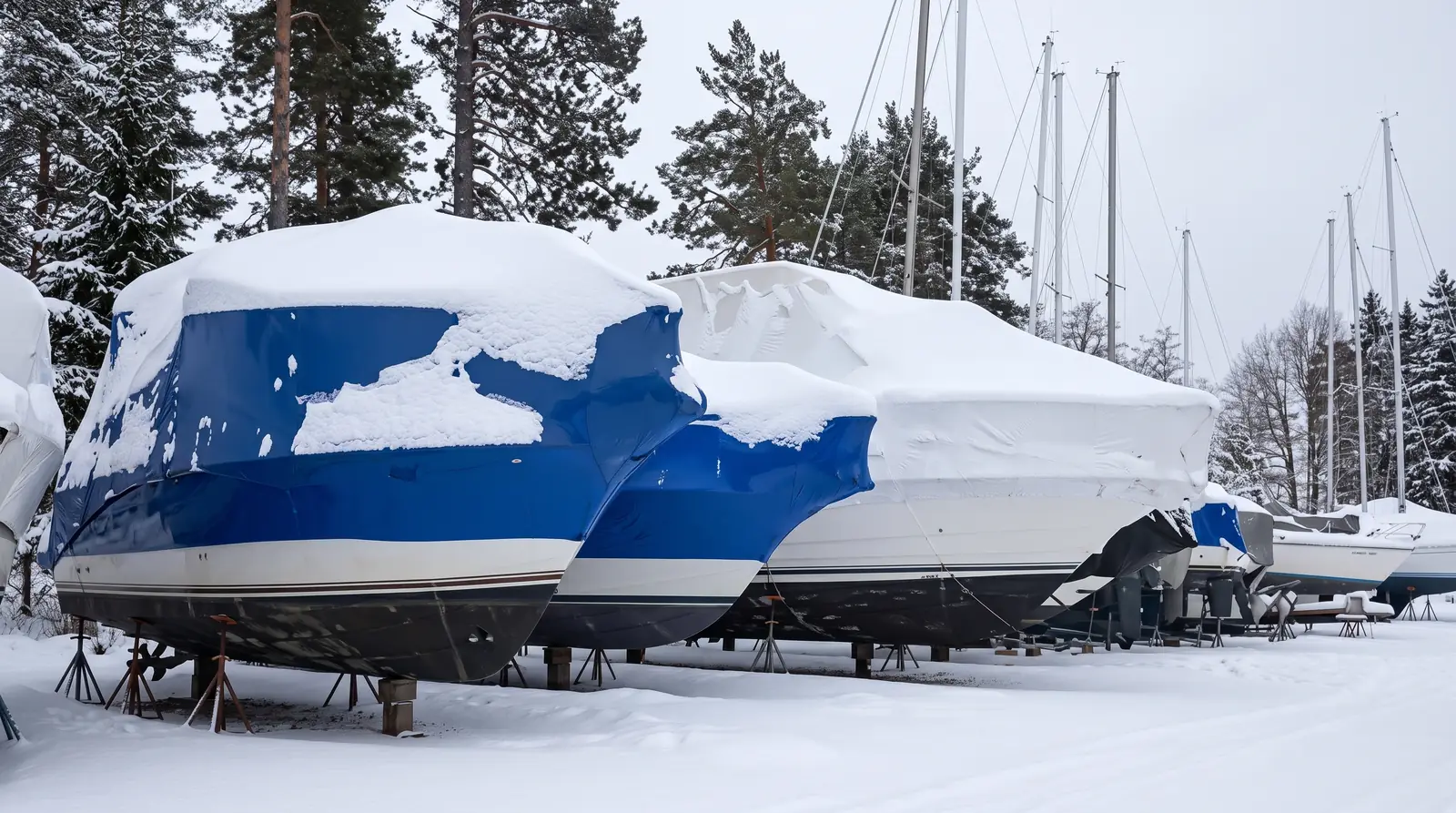
Life got busy, the weather stayed mild, and now it’s December and your boat is still sitting in the driveway under a tarp, or no cover at all. It happens every year around Barrie, Orillia and Midland. The good news is that in most cases it isn’t too late to shrink wrap a boat in December.
This guide explains what changes when you wrap late in the season, what has to happen first, and how to get your boat protected before the worst of the winter.
The short answer
Shrink wrap can be put on in cold weather. Installers work through November and December, and some wrap boats well into the winter. Cold makes the job slower and a bit harder, but it doesn’t stop it.
What matters more than the date is:
- Whether the boat has been winterized. If the engine and water systems haven’t been winterized and temperatures are already dropping below freezing, that’s the urgent part.
- Whether there’s snow or ice on the boat. The boat needs to be clear and dry before it’s wrapped.
- Whether you can find someone with an opening. Late-season slots can be limited, but there are usually still options.
Winterizing comes first
If your boat hasn’t been winterized, that’s the priority, not the wrap. Water left in an engine block, cooling system, water lines or a livewell can freeze, expand and crack parts. One cold night can be enough.
Boat winterizing usually includes:
- Draining or flushing the cooling system and adding antifreeze where needed
- Fogging the engine to protect internal parts
- Changing the oil and lower unit gear oil
- Stabilizing the fuel
- Draining fresh water systems, heads and livewells
- Removing or maintaining the battery
Typical winterizing ranges from $100–$300 for outboards and $250–$800 for sterndrives and inboards, with water systems adding roughly $75–$150. These are general market ranges, not quotes.
Outboards drain more easily than sterndrives and inboards, which hold water in more places. If you have a sterndrive or inboard that hasn’t been winterized and the temperature has already dipped well below freezing, have it checked for damage as part of the work.
What’s different about wrapping in the cold
The plastic is stiffer
Shrink wrap film gets stiffer in cold weather. It takes more heat and more care to shrink it evenly, and it’s easier to tear while handling. Experienced installers adjust for this, but the job may take a little longer.
Snow and ice have to go
The boat needs to be cleared of snow and ice before wrapping. Water trapped under the wrap leads to mould, mildew and ice damage. Clear the cockpit, seats and deck, and make sure the drain plug is out so any meltwater can drain.
Wind matters
Shrink wrapping is hard to do in strong wind. Late-season appointments may be rescheduled around the weather, so leave a little flexibility.
The support frame matters even more
A late-season wrap goes straight into the snowy months. The frame under the wrap needs to be strong enough to shed snow, with a steep enough peak that snow slides off instead of piling up. Ask about this when you book, especially if the boat is stored where it gets a lot of snow.
Can you wrap a boat with snow already on the ground?
Yes, as long as the boat itself is clear and there’s safe space to work around it. Installers need room to walk around the boat with a heat gun, and a clear path from the truck. Shovel around the boat and make sure the ground is reasonably level and not icy.
If the boat is stored at home, there also needs to be a safe distance from buildings, vehicles, fences and anything flammable, because installers use a propane heat gun.
Tarp or shrink wrap this late?
If you can’t get a shrink wrap appointment, a good tarp is better than nothing. But a tarp needs regular attention in winter:
- Tighten straps and re-tie after storms
- Clear snow so it doesn’t pool and sag
- Watch for chafing where the tarp rubs
Shrink wrap fits tighter and sheds snow better when it’s done properly. Once it’s on, it generally only needs checking after heavy snow or wind.
Sailboats
Sailboats can also be wrapped in December. A mast-down wrap is simpler. If the mast is staying up, the wrap and frame need to be built around it, which adds work and cost. See sailboat shrink wrap for more.
What it typically costs
Typical shrink wrapping runs $12–$25 per foot. Smaller boats sit at the low end, and doors, vents and in-water wrapping are extra. For sailboats with the mast up, expect roughly $2–$3 more per foot. These are general market ranges, not quotes. Late-season jobs aren’t always priced higher, but some installers charge for travel or extra snow clearing.
Before you call
Have this ready to get a quick answer:
- Boat type, make and length
- Where the boat is: driveway, yard, marina or storage lot
- Whether it’s on a trailer or cradle
- Whether it’s been winterized
- Whether you want a zippered door or vents
- Photos of the boat and the space around it
Local notes
Barrie. Many boats in and around Barrie are stored at home in driveways and yards. Mobile wrapping at your home is common, but make sure there’s room for the truck and a safe distance from the house. See boat shrink wrap in Barrie.
Orillia. Boats used on Lake Couchiching and Lake Simcoe are often pulled late because the season runs long. If yours is still in the water or just came out, plan winterizing and wrapping together. See boat shrink wrap in Orillia.
Midland. Marinas around Midland Bay usually wrap boats in their yards, so check with your marina first about who can work on site.
What to do this week
- If the boat isn’t winterized, book that first.
- Clear snow and ice off the boat and pull the drain plug.
- Clear space around the boat for the installer.
- Book boat shrink wrapping as soon as possible.
- If you can’t get a slot right away, put a tarp on properly in the meantime.
Quick answers
Is it too late to shrink wrap my boat in December?
Usually not. Shrink wrap can be applied in cold weather, and installers work through December. The bigger concern is making sure the boat is winterized before hard freezes, and clear of snow and ice before wrapping.
Can shrink wrap be applied below freezing?
Yes. The plastic is stiffer and takes more care to shrink evenly, and the job may take longer, but experienced installers wrap boats in cold weather regularly.
My boat hasn’t been winterized. What should I do first?
Book winterizing right away. Water left in the engine, cooling system or water lines can freeze and crack parts. Once the boat is winterized, it can be wrapped.
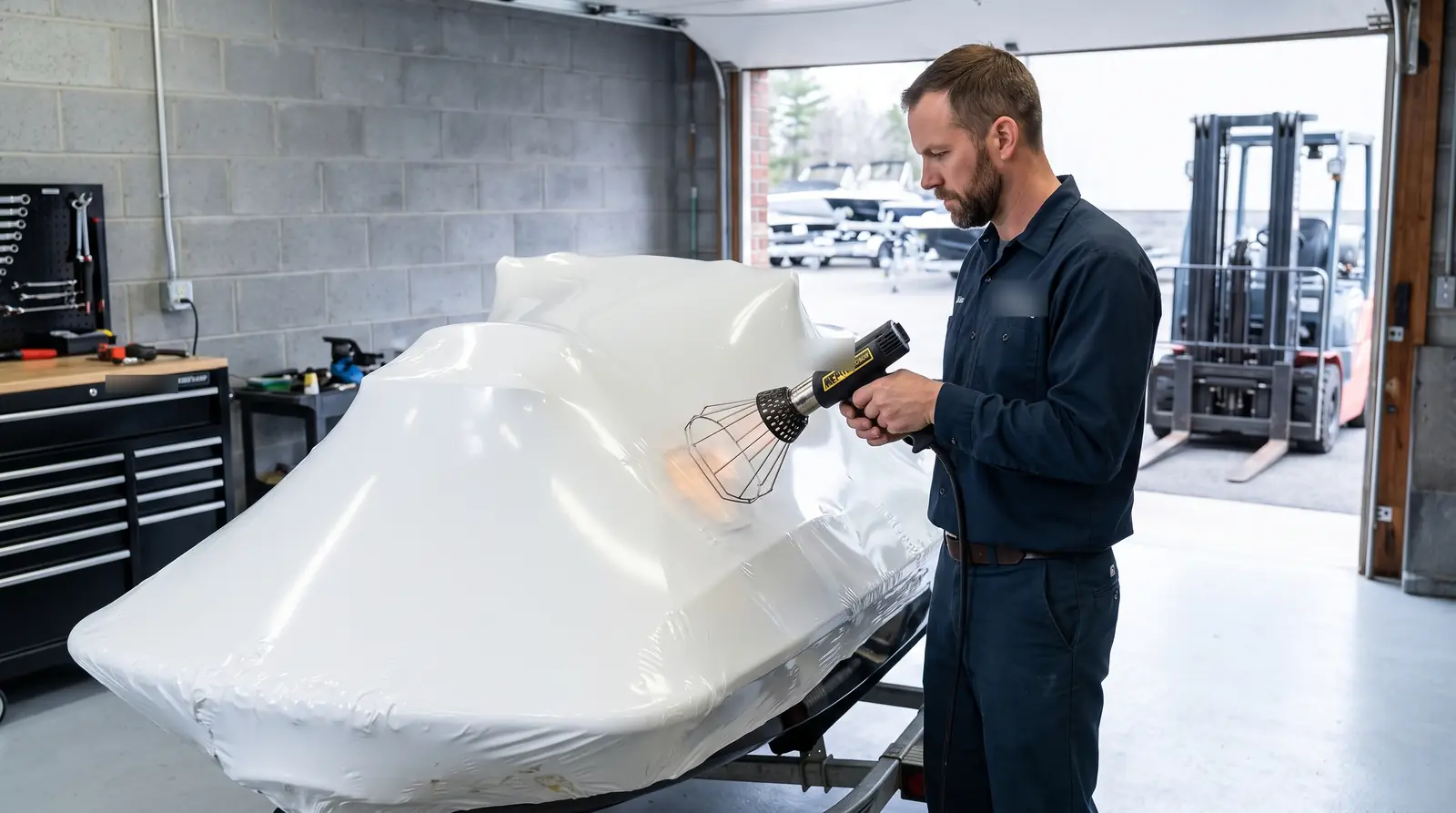 Mobile shrink wrapping
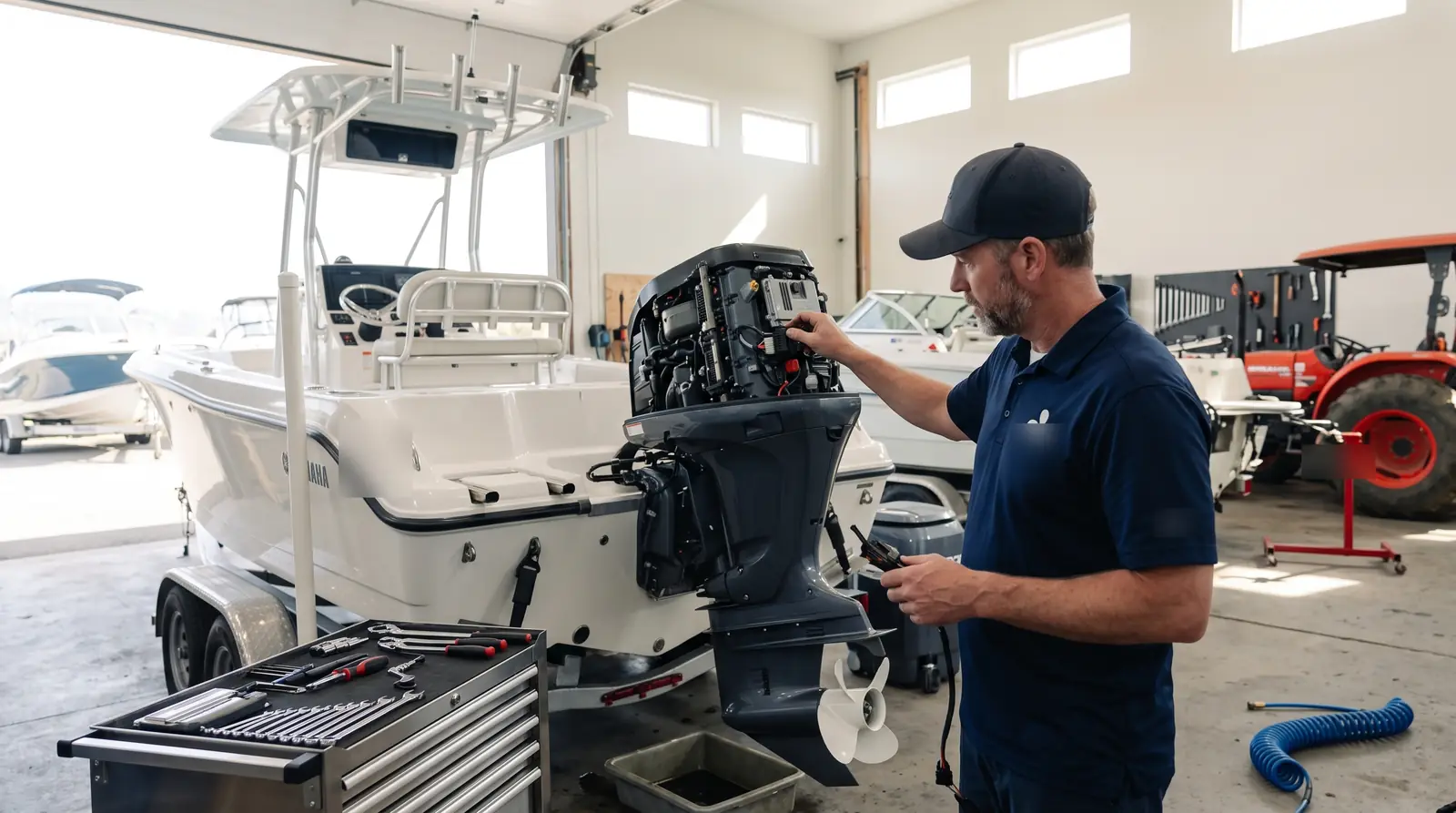 Engine winterizing
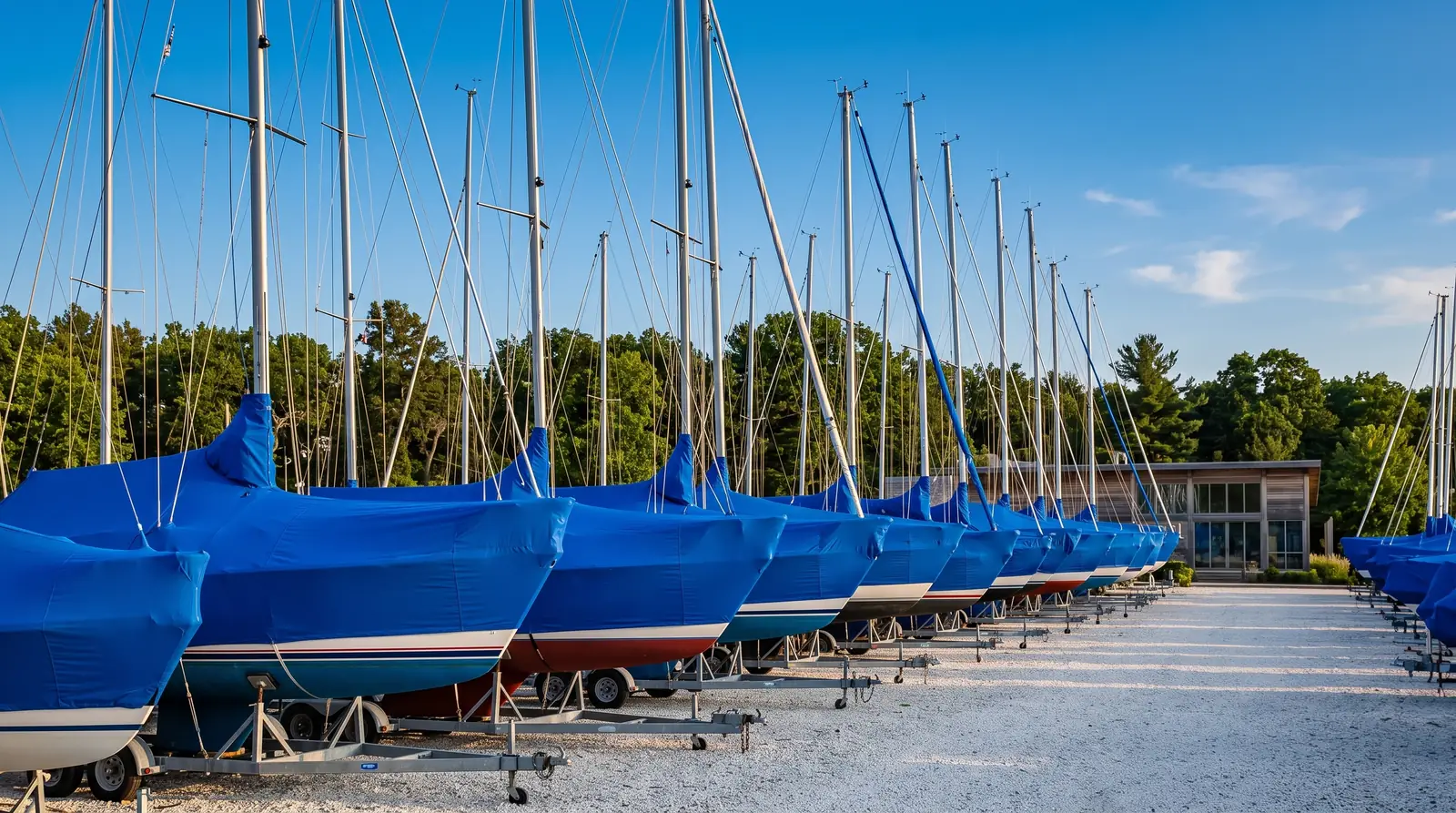 Sailboats & large boats